Vibration Plate Workouts: Benefits, Safety & 3 Routines
Vibration Plate Exercise Machine for Whole Body Workout: Benefits, Safety, and Simple Routines
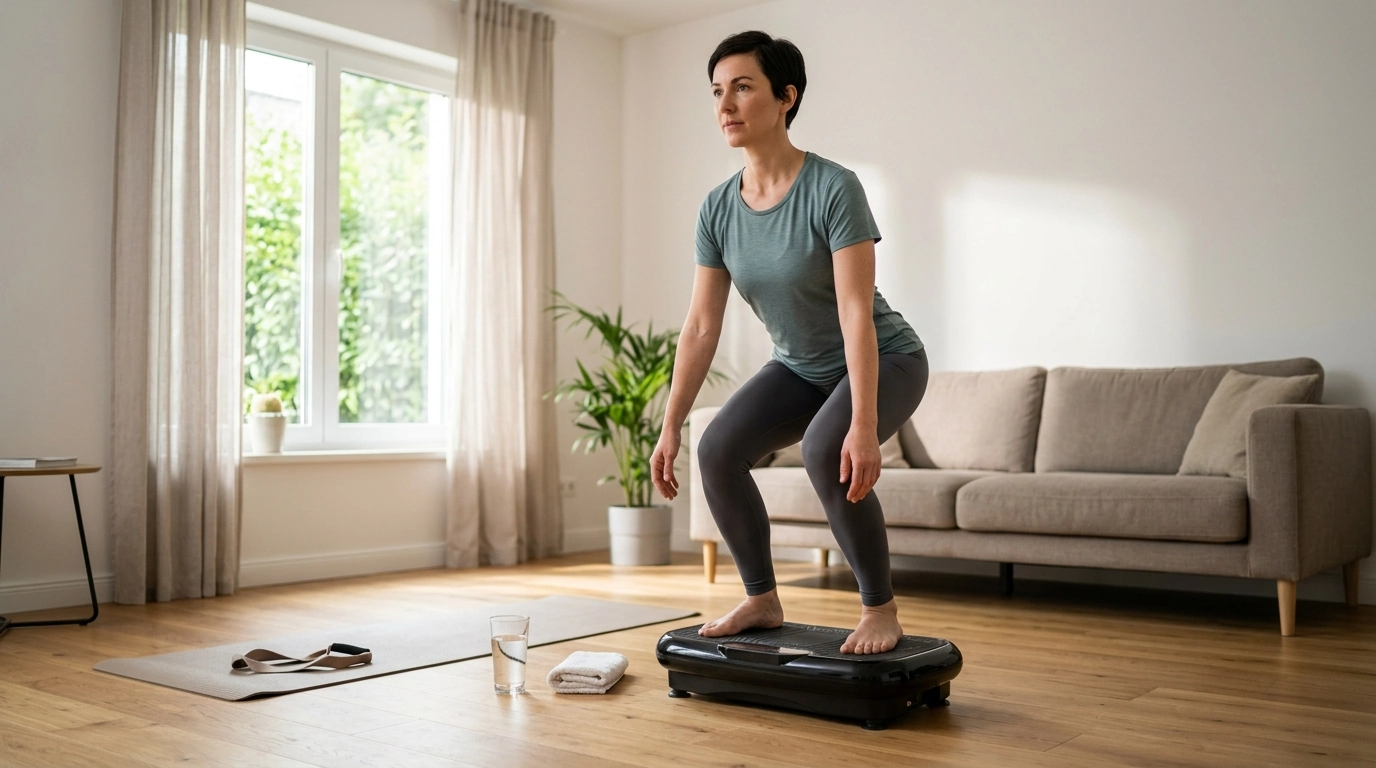
A vibration plate adds controlled, rapid oscillations to familiar movements—like squats, planks, and calf raises—so your muscles work harder during simple positions. For many people, that means shorter sessions can feel surprisingly “complete,” especially when time is tight or heavy equipment isn’t ideal. Below is a practical guide to what a vibration plate does, who it’s best for, how to use it safely, and a few straightforward routines you can repeat at home.
What a vibration plate does during exercise
When you stand, brace, or hold a position on a vibrating platform, the small, quick movements encourage repeated muscle contractions. This can increase muscle engagement during static holds (like planks) and basic strength patterns (like squat holds) without needing to add external load.
A vibration plate tends to pair best with foundational patterns:
- Squat/hinge: mini-squat holds, hip-hinge pulses, split squat holds
- Push: push-up holds (hands on the plate), elevated holds
- Pull: resistance-band rows while standing on or near the plate (setup dependent)
- Core bracing: forearm planks, side planks, dead-bug style bracing off the plate
- Balance work: athletic stance, narrow stance, gentle single-leg taps
Common goals include time-efficient workouts, added intensity for bodyweight training, gentle loading for beginners, and a circulation-friendly warm-up effect. For best results, consistency matters more than max intensity: progress by improving positioning (stance width, knee bend, plank leverage), then gradually increasing time and only then dialing up intensity. If you want a deeper look at the research landscape on whole-body vibration, PubMed is a useful starting point: National Institutes of Health (NIH) – PubMed.
Who it’s great for—and who should avoid it
A vibration plate can be a strong fit for:
- Busy schedules: productive 10–15 minute sessions
- Low-impact preferences: intensity without jumping
- Bodyweight training fans: an added challenge without heavy gear
- Balance and stability goals: steady practice with simple stances
Use extra caution or consult a clinician first if you have pregnancy, acute inflammation, recent surgery, severe osteoporosis, uncontrolled high blood pressure, deep vein thrombosis risk, pacemakers/implanted devices, or significant neuropathy/vertigo. If you feel numbness, sharp joint pain, headache, or dizziness, step off and reassess—reduce intensity or time, adjust stance, and rest.
A vibration plate is a training tool—not a stand-alone cure—and it works best when combined with progressive strength training and regular aerobic activity. General progression and technique guidance from established fitness organizations can be helpful when building a plan; see American Council on Exercise (ACE) for broader training education.
How to use it safely (setup, posture, and session length)
Most people do best by starting smaller than they expect. Begin with 5–10 minutes total, 2–4 times per week, using low-to-moderate intensity and generous rest breaks. Add time or intensity gradually over a few weeks as your tolerance improves.
Posture cues that make a big difference
Whole-body routines (quick sessions that feel complete)
Routine A (10 minutes, beginner)
Routine B (12–15 minutes, strength emphasis)
Routine C (mobility + circulation, apartment-friendly)
| Move | Time | Focus | Make it easier | Make it harder |
|---|---|---|---|---|
| Athletic stance | 30–60s | Warm-up, balance | Hold a wall/chair lightly | Narrow stance or single-leg taps |
| Mini-squat hold/pulses | 30–45s | Quads, glutes | Smaller knee bend | Deeper bend or slower tempo |
| Forearm plank | 20–40s | Core bracing | Knees down | Longer lever or shoulder taps |
| Calf raises | 30–45s | Lower legs, circulation | Use support | Single-leg or longer holds at top |
| Glute bridge (feet on plate) | 30–45s | Glutes, posterior chain | Shorter range | Single-leg bridge or longer holds |
What to look for when choosing a vibration plate
Product spotlight: Vibration Plate Exercise Machine for Whole Body Workout
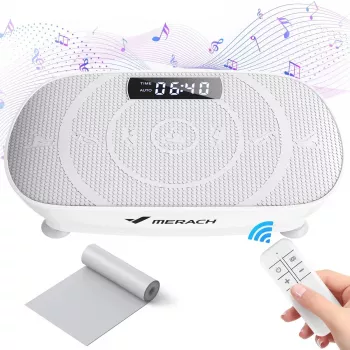
If you want a compact tool built for at-home training, the Vibration Plate Exercise Machine for Whole Body Workout is designed to fit into small spaces while still supporting the basics—warm-up stance work, squats, calf training, and plank variations. It’s a practical way to make bodyweight moves feel more challenging without adding heavy equipment.
A simple weekly structure that many people stick with: 3 short strength-focused sessions (Routine A or B) plus 1 lighter mobility/recovery session (Routine C). For general training safety reminders—especially around gradual progression and listening to your joints—reputable medical fitness resources like Cleveland Clinic can be a helpful reference.
Helpful add-ons for a more consistent home routine
- Calvin Klein Men’s Zip-Up Hooded Sweatshirt for warm-ups, cool-downs, and keeping muscles warm between sets.
- Flagship HiFi Earphones to make short sessions easier to repeat with a playlist or guided timer.
FAQ
How long should a beginner use a vibration plate per session?
Start with 5–10 minutes total at low-to-moderate intensity, using rest breaks between sets. Build up gradually over 2–4 weeks based on comfort, form quality, and recovery.
Can a vibration plate help with weight loss?
It can raise the challenge of short workouts and support consistency, which helps overall activity levels. Fat loss still depends mostly on total weekly movement, strength training, and nutrition, so treat the plate as an add-on tool.
Is it safe to use a vibration plate every day?
Many people tolerate daily use when intensity is low and sessions are short, but recovery still matters. Alternate harder and easier days, and stop or reduce volume if joints feel irritated or you notice tingling or numbness.







Leave a comment